How Restrictions During Coronavirus Can Ignite Long-Term Environmental Healing

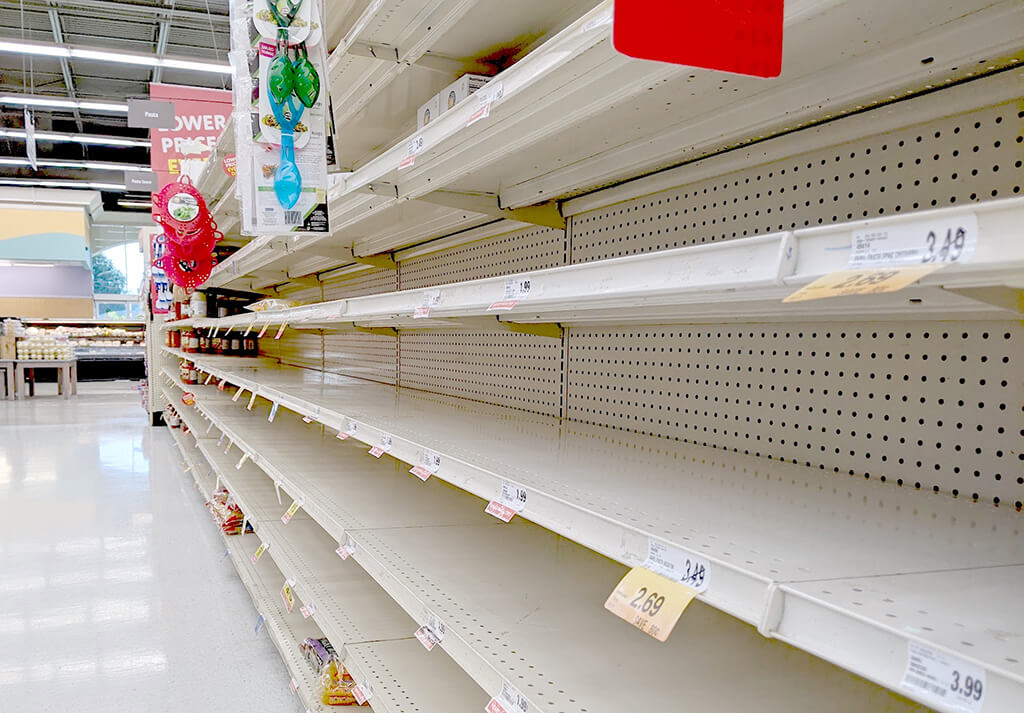
With coronavirus challenging our sense of security, we naturally feel a loss of control. When we fear for the safety of loved ones, and even when our basic routines are disrupted, we are reminded of the delicate nature of what we consider familiar. 

As with most things we can’t control, there isn’t much we can do now except wait for it to pass—and as we fulfill our foremost obligation to socially distance, this wait can feel frustratingly passive. But if we have an opportunity to actively contribute to another critical pandemic concern, why not take it? 

Coronavirus has provided us leverage to secure our footing in eco-friendly living with a momentum we have perhaps never had. We have demonstrated the selfless ability to mutually forego consumer pleasures and adapt to a tightened environmental footprint when it counts. We’ve done the hard part when it comes to greenifying: starting. Let’s kick our conscious commitment up a notch, and piggyback off this energy to keep it going in times of stability.

Now’s the Time to Build Green Habits

Since these lockdowns started, there has been a global shift not only in CO2 emissions associated with the temporary friction on spending and travel, but also in our attitudes toward what we need and want, use and waste. We haven’t all proclaimed with sudden clarity that a life of minimalism is the way forward, but we have begun to look at our resources through a different lens, assigning more value to what we have. 

Despite the tremendous amounts of farm-level food waste that has resulted from closures in the hospitality business, a shift in consumer mindset is, in my book, a huge environmental win. We have the capability to carry this mindset with us into the future, long past the chaos of this crisis.
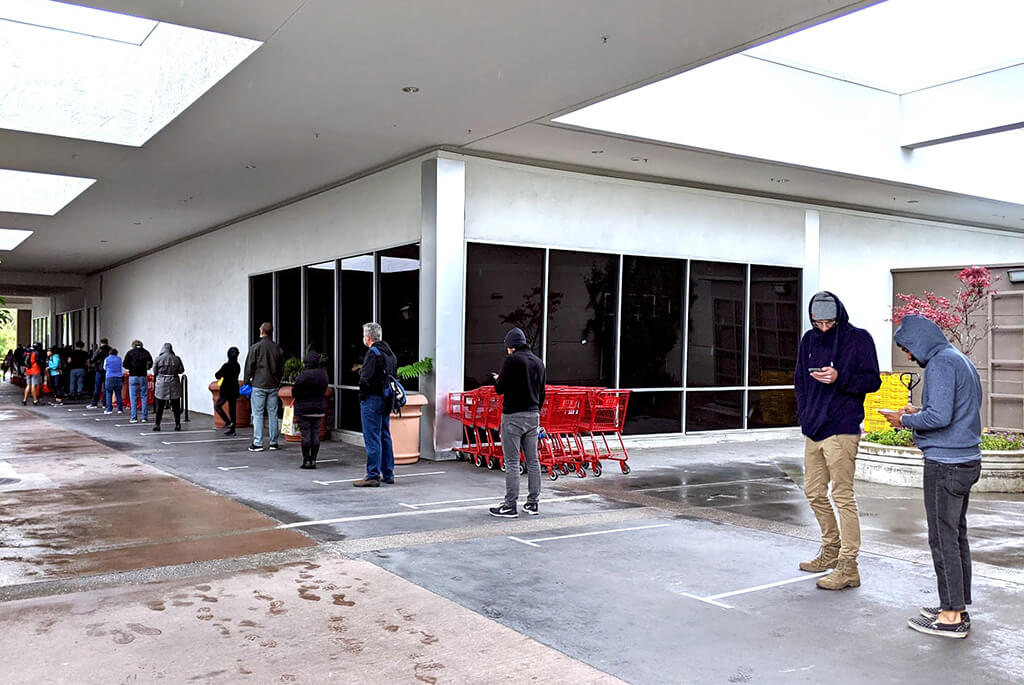
The power of combined action is evident in China, where rates of coronavirus have dwindled; a trend soon to be followed in the US. Peaking death tolls provide evidence of our collective elasticity and our ability to put others before ourselves. When we emerge from our shelter-in-place mindset, I dearly hope that we continue to recognize the presence of excess in our lives, and the social, environmental, and spiritual benefits of rising above it.

Most techniques for green living are highly applicable now, in our time of obligatory self-sufficiency. If you can, get in the habit of buying your soaps, shampoos, and cleaning agents in bulk (or make them yourself!). Don’t rely on a constantly-replenishing supply of paper towels and tissues, but replace yours with cloth napkins and handkerchiefs. If you have a yard or even space for planters, grow your own vegetables and herbs. Conserve your resources by treating them with care, using only what you need, and reusing what you can. Learn DIY skills to make and fix, reducing your reliance on having to buy and replace. 

We can fight lifestyle simplifications, or take them in stride; hate them, or have fun with them. Rather than thinking of our temporarily compromised lifestyle as restricted, think of it as focused. Eco-friendly living is not limited—rather, it is guided. 

Environmental progress spurred by coronavirus can perhaps lend some purpose to what can otherwise feel like meaningless devastation. If we neglect to build on this progress, the feeling of futility that has paralyzed individuals for decades will continue to prevail: we need to quash this debilitating doubt by doing what we now know we can—making lasting repairs to our planet, one home at a time.

The Pitfalls of Constant Availability

In 2020, we live lives of instant gratification. If we need a specific ingredient to cook with, our local supermarket is likely to have it at any given time, down to that niche product and specific brand; if we don’t feel like stepping out the door to do our shopping, we order it online. Buying was never easier. 
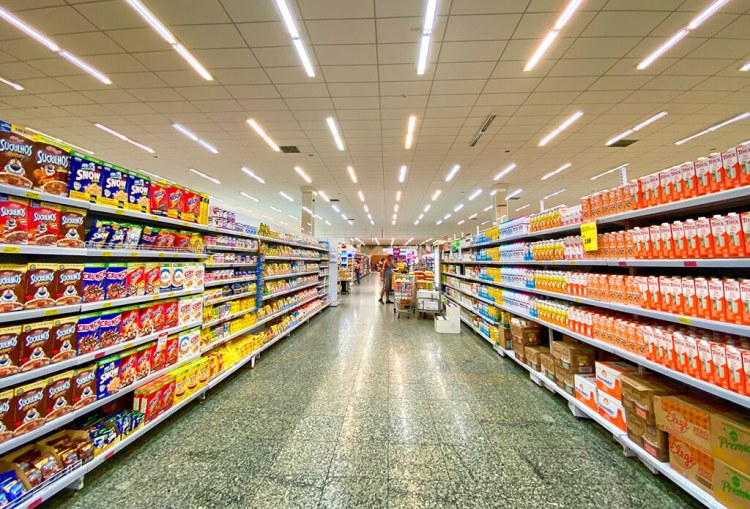
Photo by Nathalia Rosa

When it comes to shopping for food, our expectations for bottomless availability is leading us down an environmentally-destructive path. I spoke in March with my former manager, Lauren Palumbo, about food waste at grocery stores; Lauren is the Chief Operating Officer at Lovin’ Spoonfuls, a Boston-based nonprofit that diverts food from the waste stream, redirecting over 16,000,000 pounds of excess food from retailers to food-insecure communities to date. 

To meet consumer demand, grocery stores “over-order, overstock, and are always prepared because they don’t want to lose that customer,” says Lauren. “As recently as 40 or 50 years ago, that just would not have been the case. But I live in New England and it’s March, and I can get pretty much anything at the grocery store that I want, whether it’s coming from down the street or halfway across the world.” 

This supposed progress has led our food system in a dire direction. “It is just not a system that allows for clear predictability about what consumers buy,” Lauren says. What consumers don’t buy ends up in our waste stream, contributing to that statistic you may be familiar with—the 40% of food that is never eaten. This means the massive amount of resources that go into growing, processing, packaging, transporting, storing, marketing, and selling almost half of our food (food that could provide valuable nutrition to those who have difficulty accessing it) are pointlessly depleted. 
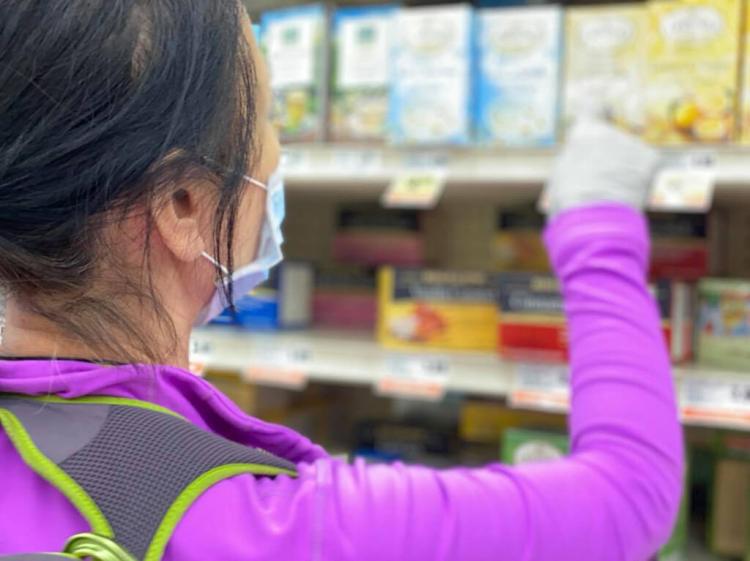
We have accepted this constant availability of supply as a fact of our consumer culture, something we are entitled to. The idea that it is a relatively recent evolution of our lifestyle is something we should continue to remind ourselves: as we are seeing during this pandemic, such consumer convenience is not automatic. Despite the reliance we have developed upon this system of excess, we can clearly exist with a reduced version of it. 

In fact, in order to advance our food system in a way that fits sustainably with our lives as mortals dependent on the wellbeing of our planet, we will need to move away from it. To do so, “it would take a really significant shift in the way that we think about how we produce and order and secure our food as consumers,” says Lauren. “I think as long as we as consumers understand that we want high quality and we want things to be available all the time, we are driving that problem. And I don’t think food is the only place where that happens. If you look at a Marshalls or a TJ Maxx or something like that, it’s happening there for the exact same reason as it does with food, it’s happening with retail in a different format.”

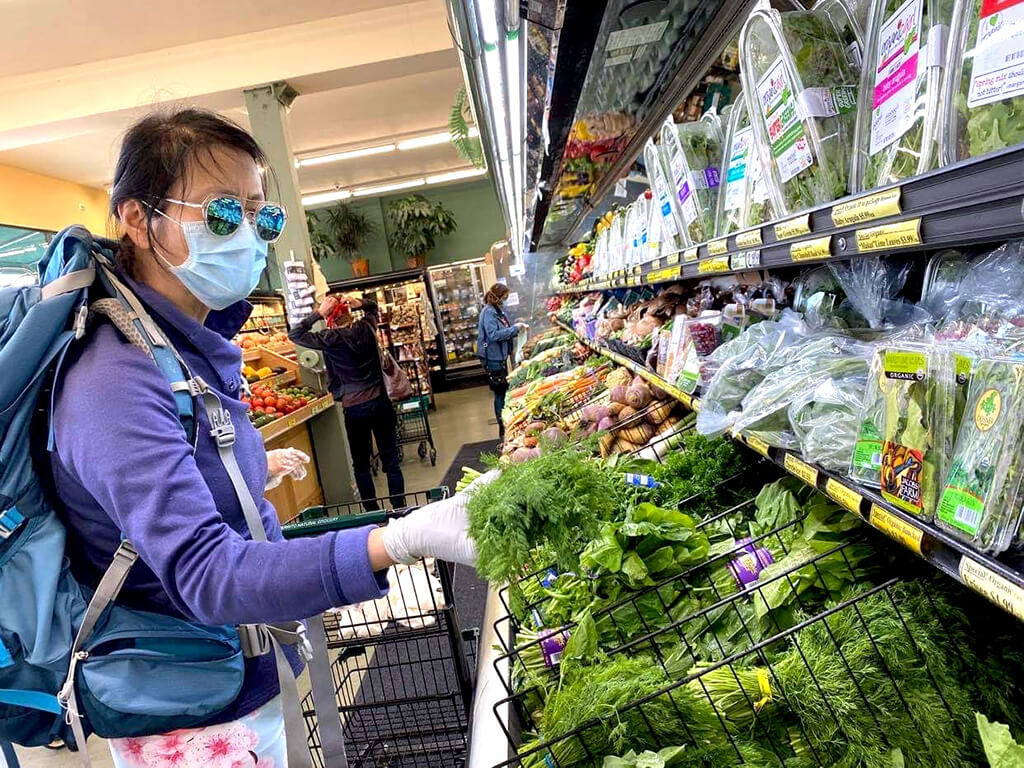
During this time, when our lives have turned sideways and we adjust to new ways of consuming, we are given an opportunity to re-evaluate what it costs to sustain our system of supply, and what drives our level of demand. We can learn from the crisis we face right now and, aided by this perspective, equip ourselves to prioritize environmental health. 
Push Forward  

The unfortunate reality is that we need the extremity of a pandemic to spur us to environmental action: the extremity of our warming planet is too abstract for us to feel. If we can collectively choose to take our impending environmental emergency as seriously as we take an emergency that is undeniably upon us, we will be able to keep it from becoming the kind of tragedy that we are currently experiencing. 

Inaction is largely a product of doubting the importance of our contributions: though our culture has entertained a steady crawl in the right direction, an unacceptable majority of us have yielded to this feeling of powerlessness. Not unlike the battle that consumes us now, the state of our earth leaves no more room for procrastination. We now have proof that when we buckle down and do our part, our individual actions can contribute to beating a global catastrophe. 

Essentially, all we have to do in our fight against climate change is expand upon and integrate isolation-friendly habits of moderation into the flow of our regular lives, tweaking them to fit feasibly into the long-term. 

Sustaining a reduced footprint doesn’t have to be as uncomfortable as the shock of our suddenly-imposed isolation: environmental diligence isn’t a grueling, time-consuming slog. Once you develop personalized systems to support your modified routines, you will question how you have lived otherwise. 

Continue to take ownership of your role as members of society and our ecosystem. Harness this momentum.

Related:

An Imperfect Food System: It All Comes Back to Climate Change

How to Shop Responsibly (and Buy Less Stuff)

Captive Overconsumers: Why We’re Stuck in a Cycle of Spending

Should We Follow Expiration Dates?

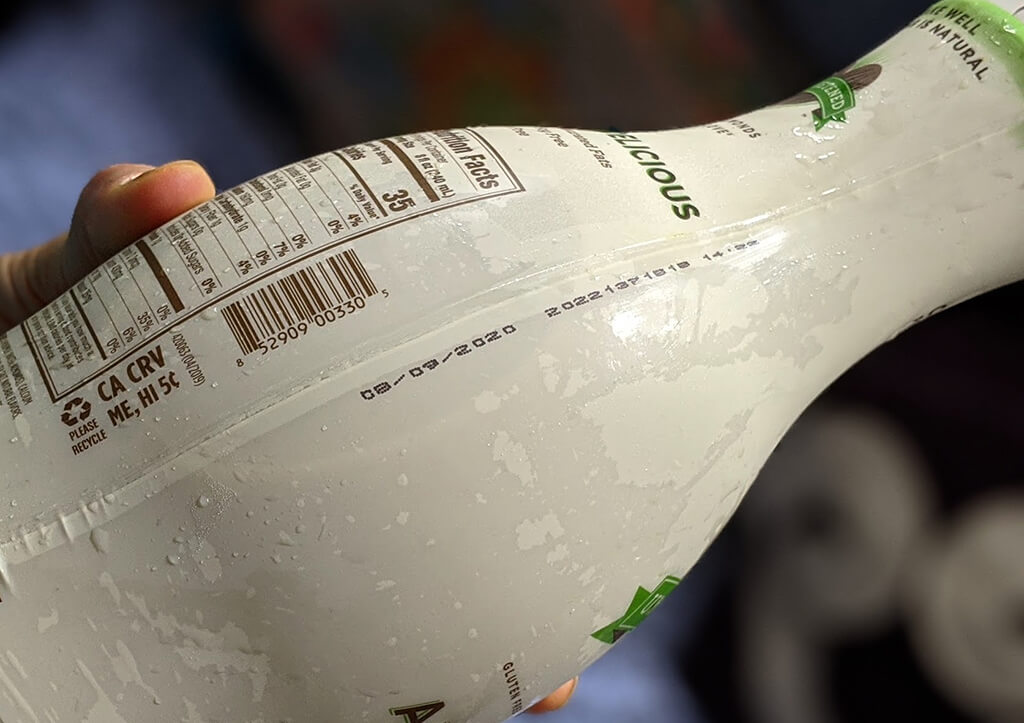
The presence of date labels has for decades baffled us into making overly cautious purchasing and eating decisions. According to Frank Yuannas, a deputy commissioner at the FDA, confusion over date labels accounts for 20% of household food waste in America. As consumers, we are the single largest source of food waste postharvest—producing more from our homes than restaurants and grocery stores combined. 

Though consumers are becoming increasingly savvy about the arbitrary nature of expiration dates, we still get skittish when our awareness is put to the test. In the face of a looming date, our knowledge seems to evaporate: fridge-side, we ponder what to do, engaged in silent moral battle, summoning up courage that leaves in a moment, untrusting of our nostrils, debating how much a bottle of milk is really worth, combing through our rolodex of negative interactions with food, wondering how long we’ve been standing there. Then with a cringe and heavy sigh, we inevitably say goodbye to our bottle of milk; it looked a little sad anyway. 

Though we know better than to take the phrase “expiration date” literally, we fear to deviate from what we’ve been led to believe the stamp on our milk so clearly instructs. We hanker for a guide to follow; a clear-cut affidavit of whether we can eat our food with confidence. 

I am here to say there is no better authority to provide that information than you. Many of us are stuck on the notion that it takes nerve to rebel against the guidance of the date label. But sniffing out freshness doesn’t require the experience of trial and error. It isn’t a skill we learn: it’s a skill we’re born with.    

Some Background

Date labels available to consumers today were originally intended for the retailer as a guideline for freshness: before dates were stamped on product packaging, they were referenced from a chart as a measurement for when product should be rotated out. In the progressive 1970’s, consumers grew antsy about the lack of information around the food they were buying—they wanted these dates open to the public to help them qualify the safety of their food. 

When date labeling hence became public, consumers interpreted these numbers as a determination for when food was no longer safe to eat. No one was there to clarify that their purpose was to suggest a period of peak quality: something that revolved around taste and sales rather than consumer health.

Date labeling is subjective

  • Except on infant formula, date labeling is not federally regulated and there is no authority enforcing a single standard
  • Labeling laws vary state to state
  • Dates are determined by the food manufacturer, and methods of deriving dates vary from manufacturer to manufacturer
  • It is in a food manufacturer’s best interest to keep their date window narrow, as there is financial incentive for peak product freshness and to encourage the frequent purchase of their product 
  • Shelf life cannot be tied to any predetermined date—storage is a big factor in how long a product will remain fresh
  • Companies will perform taste tests to determine their dates. Smaller companies that can’t afford a taste test will base their dates off a similar product from another company, hoping their product’s quality arc will parallel with that of the other product. 

This process is far from scientific or precise, yet we throw our milk out the day after the date has passed, as if by rule. Of course we do—no one wants food poisoning, those dates look awfully official, and the word “expires” that we associate with all date labels is ominously grim. But, as up to 40% of food in America is wasted while 1 in 8 Americans are food insecure, and since we know that these dates are irrelevant to food safety, it is important that we make a conscious effort to look past these preconceptions and treat our personal food waste as a rare occasion. 

How Date Label Confusion Contributes to Food Waste

  • Over 90% of Americans are tossing perfectly edible food by misinterpreting date labels, according to a Natural Resources Defense Council and Harvard Law School’s Food Law and Policy Clinic’s study on how date labels influence food waste. 
  • Roughly $900 million worth of passed-date food is wasted each year, according to the NRDC and Harvard Law’s study.
  • Customers are unwilling to buy products that are approaching these arbitrary dates. When that troublesome date then arrives, these unsold products fill the retailer’s back dumpster—daily
  • In America, over a third of food that’s wasted is done so after it has reached the hands of the consumer 
  • This is not only a waste of money (and of farmer labor), but of our finite natural resources that are used to grow, process, distribute, and store our food. Tossed food is also harmful to the environment through the needless expenditure of chemical pollutants and greenhouse gases, including the creation of methane gas when food decomposes in landfills. 

This fragmented system is clearly not working. Luckily there is some action being taken toward establishing uniformity among how date labels are presented. The Consumer Goods Forum (CGF), a conglomeration of over 400 of the largest food corporations in the world (including Campbell Soup, Kellogg, and Nestle), have committed to conform to one date format. For perishable goods, “use by” will become the standard, and one for shelf-stable goods, “best if used by.” These changes are to be made by 2020, so we should see them already rolling out.

Freeing Yourself From Imposed Conceptions of Value and Worth

  • Trust your senses! Humans have been cooking for over 1.9 million years and have evolved to possess magnificently fine-tuned tools to help us survive. These complex biological systems have made it simple for us to detect if food is edible: 
    • use your eyes to check for slime or mold
    • use your nose to test for off-smells
    • use your mouth for a small taste—you can always spit it out if it turns out to have gone south!
  • Get creative; be resourceful. Open your imagination to different recipes and techniques of cooking. Most food grossness that is the result of a longer storage stint is only skin deep—you can cut off the mold on cheese, the split in a tomato, the soft spot of an onion. With food that you wouldn’t want to serve in a salad, make it into a soup, a smoothie, or a pesto—and freeze the leftovers to get to when you’re ready!
  • Make the most of your money and use every edible part of your produce! Why toss the stems of mushrooms or even the greens of carrots or beets? These can all be eaten! 
  • When you’re at the grocery store, search for the bruised pear, nicked cucumber, or dented carton of milk, as these will be the last to sell and first to be trashed. Don’t buy into the hunt for perfectionism—perfectionism is a construct of marketing and commercialism, and isn’t relevant to growing delicious and healthy food.

Retailers and Date Label Food Waste

Not only does date labeling produce a tremendous amount of waste in households, but at the grocery store level as well: food retail protocol requires that items be rotated off the shelves by their sell-by date. Working at a food rescue organization where a considerable portion of the donation we received from grocery stores was their nearly- “expired” food, I was thankful that these batches were lucky enough to have a chance at the dinner table. Most food however, is not so fortunate, and I came to deeply resent the undeserving clout these numbers have acquired. 

Note: Though grateful families have a chance to eat this donated food, the portion of food rescued from the waste stream is still painfully small. The “excess” produced by retailers that are already frequented by food rescue organizations can quickly exceed that organizations’ capacity to capture and transport; the excess produced by the millions of vendors around the world that do not donate continues to go to waste. There is no shortage of food to supply donation programs: as we produce enough food globally to feed 150% of the world’s population, quantity is not the issue, but the ability to connect this food with those who need it.

Food Rescue Coordinator, Deb, weighs a box of recovered food before handing it off to a hunger relief agency.

Customers often steer clear of groceries on their sell-by date (down to packaged raw vegetables that require only a sense of vision to know whether they’re edible), opting instead for the fresher option. In anticipation of this, stores will cull food within a few days of their date—sometimes even a week or two in advance, if newer replacements are available. 

This is not to mention the mountains of food discarded daily for reasons unrelated to date labeling: over-ordering, periodically flipping shelf displays, redesigned packaging, receiving the wrong item, rotating seasonal stock, fulfilling corporate contracts for shelf space when demand for that product is low, manufacturers testing out new products, manufacturers producing too much of a product. In these cases, the date on this trash-bound food can be a year or more away. 

These internal retail issues are more difficult for us to influence. But when it comes to date labels, we can start to curb the trend of retail-level waste by purchasing that item on the last day of its date. This is both to ensure the item isn’t gratuitously thrown away, and to communicate to the store that there is no need to prematurely discard these products. 

Our Disconnection From Natural Processes

Date labels don’t protect us from food poisoning. They provide an excuse for us to erase any opportunity to question edibility by removing our food from the picture at its peak quality. Date labels protect us from witnessing the southward turn that perishables inevitably take. 

Our reliance on date labels betrays an interesting aspect of our psychology. What we fear as much as stomach upset, I think, is the possibility of confronting fermenting food. 

The proliferation of date labels in the 1970’s came as a result of consumers feeling disconnected from their food. Unfortunately, date labels have left us even further removed: so much so that we are both afraid of merely encountering food’s natural breakdown, and incapable of disagreeing with expiration dates when our instincts tell us otherwise.

I have friends who are so revolted by addressing mold or odor that they dump the entire container of food in the trash—tupperware and all. Though unlike our canine companions we’ve thankfully evolved an aversion to decomposing food, the function of this instinct is to keep us from ingesting it. We are sophisticated enough to get past the fact that it simply exists, and once in a while in our refrigerators. 

In an age of obsessive cleanliness, we—Americans in particular—have grown more and more averse to natural processes. This results in daily showers, single-use plastics, denying that we fart, and a pettiness around aging food.  

I have a better way to remove the threat of exposure to diminished freshness: eat your food!

Stop living in Fear

At home, I don’t look at date labels at all. If you’ve forgotten when you purchased an item, there’s no harm in checking the date for reference—but unless you live with multiple people with whom you share groceries, this should be a rare need. 

I am quite liberal with what I’ll eat, perhaps more than I would recommend for others. But I have never once had food poisoning from the many-months-expired food I’ve tried. The only bouts of food poisoning I’ve had in my life happened to come from just-bought items that were well shy of their expiration date. 

There is simply no point to live in fear of food poisoning. There is no point in having a rational understanding that your yogurt is fine to eat, yet still dropping it in the trash because you’re afraid of “taking the risk.” If it smells off—by all means, compost and recycle. If it doesn’t, remind yourself that the environmental consequences of nullifying the production of both that yogurt and its packaging is real, especially when multiplied over the span of your life in the form of a habit. 

These consequences reside in the methane that enters our atmosphere, the land that’s stripped of its top soil, the water that’s lost in growing and manufacturing—and on and on. Because we don’t see the costs of throwing our food away, it’s our responsibility to remember these costs throughout our interaction with food: as we shop, when we plan our meals, when we consider eating out instead of eating what we have, as we decide whether or not to throw our food away. If you uncover a fermenting meal in your fridge, don’t beat yourself up about it—just compost it and learn from your mistakes. 

With practice and application, you’ll overcome your trepidation and feel confident in living free of date labels. Trust your senses: if it looks ok, smells ok, feels ok, and tastes ok, your food is ok to eat.

The Meaning of Date Labeling Decoded, in the Words of the USDA:

  • A “Best if Used By/Before” date indicates when a product will be of best flavor or quality.  It is not a purchase or safety date.
  • A “Sell-By” date tells the store how long to display the product for sale for inventory management.  It is not a safety date.  
  • A “Use-By” date is the last date recommended for the use of the product while at peak quality. It is not a safety date except for when used on infant formula as described below.
  • A “Freeze-By” date indicates when a product should be frozen to maintain peak quality. It is not a purchase or safety date.

More Resources:

Related Posts:

An Imperfect Food System: Reducing Waste While You Shop

An Imperfect Food System: It All Comes Back to Climate Change

An Imperfect Food System: How Food Waste Perpetuates Food Insecurity